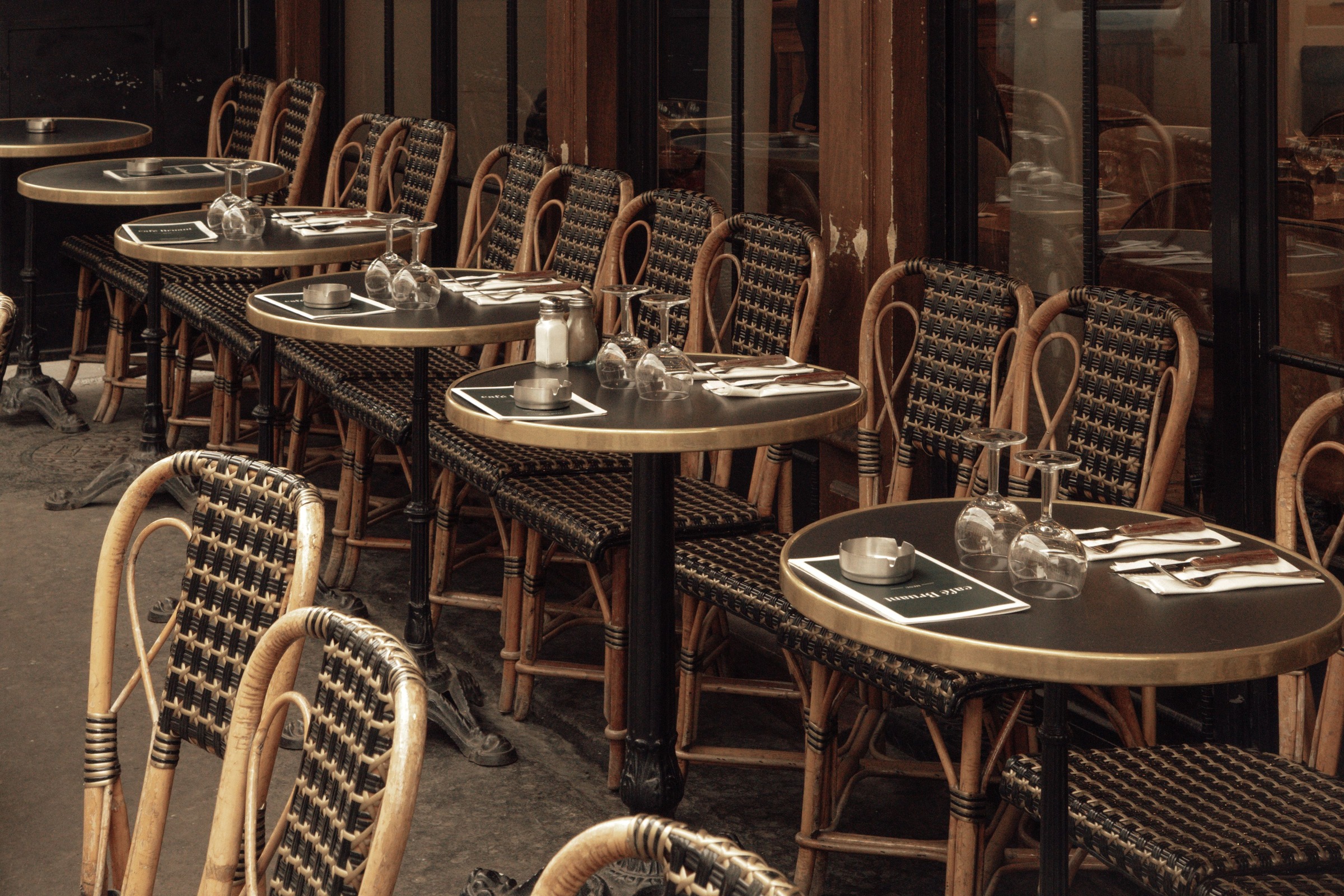
Paris
The Gilded Hour
“The classics are classics for a reason.”
D. reads as The Curator — would rather do three things properly than nine adequately, and has never once enjoyed a queue. P. reads as The Gallerist — happiest with a new address, booked in advance so the day still has room in it. Together that is Chapter II, The Gilded Hour: the great city done at the right hour and from the right table. These three days are written in that voice. Answered by a different pair, the same Paris comes back barely recognisable — and that is the version we would have sent them.
THING THE PLACE IS KNOWN FOR
SEPTEMBER–OCTOBER · APRIL–JUNE
THREE DAYS · TWO NIGHTS MINIMUM
Paris rewards the obvious, if you do the obvious properly.
There is a kind of traveller who arrives in Paris determined to avoid it — the arrondissement nobody writes about, the bistro with no sign, the museum that is really a converted garage. It is a respectable instinct and it is the wrong one here, because Paris is one of the few cities on earth whose famous things are famous for accurate reasons.
The Gilded Hour is the chapter for couples who already know that. Comfort high, food higher, novelty deliberately low — not because you lack curiosity, but because you would rather have the great version of a known thing than the interesting version of an unknown one. That is a real preference and it is badly served by most travel writing, which treats the canonical as a failure of imagination.
So: three days that go where everyone goes, at the hours almost nobody does. The Louvre for ninety minutes. Sainte-Chapelle only in good light. One dinner the whole trip bends around. The discipline is not in what you skip — it is in refusing to do any of it badly.
COMFORT · FOOD HIGH
NEW TO US, LOW ON PURPOSE
Somebody else's house.
Two private collections, an hour of glass, and the dinner the trip is built around.
The first day of any Paris trip is spent partly asleep, so it is the wrong day for the Louvre and the right day for rooms that were designed for people to live in. Both stops today were houses before they were museums, which means they are sized for a human afternoon rather than an institutional one.
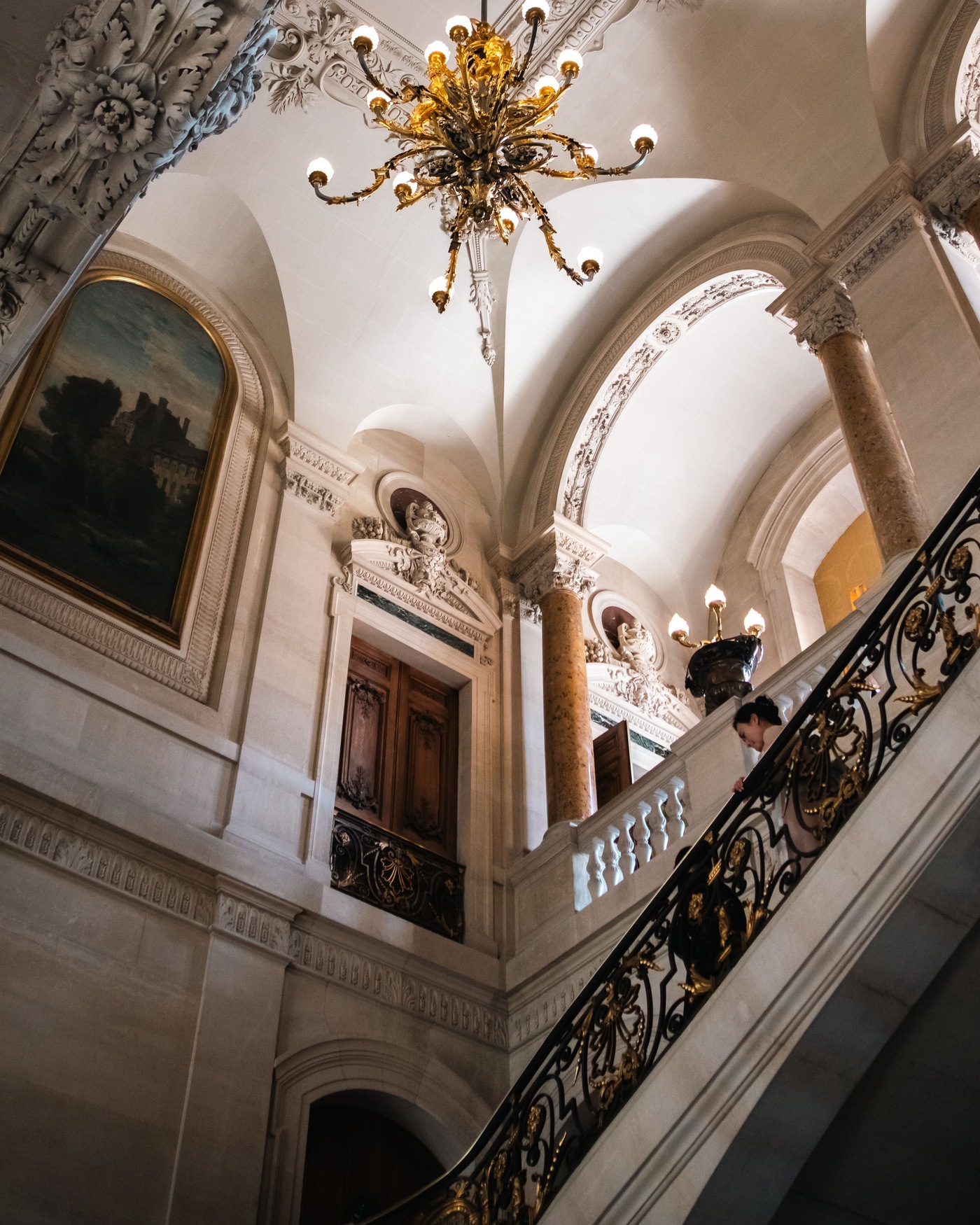
Musée Jacquemart-André
MORNINGA banker and his painter wife spent forty years buying Italian Renaissance work and then left the house exactly as it stood. It is the Louvre's argument made small enough to finish. The winter garden and the tea room under the Tiepolo are the reason to arrive before the coaches.
Lunch, the Marais
BOOK AHEADA long one. Place des Vosges is four minutes' walk and the arcade is the best place in Paris to do nothing for an hour afterwards.
Sainte-Chapelle
TIMED ENTRYFifteen metres of thirteenth-century glass and almost no wall. Go on a bright afternoon or do not go — the upper chapel is a light instrument and on a grey day it is switched off. Twenty minutes is enough; it is not a museum, it is a single effect.
Dinner
THE ONEThe evening the trip is built around. Two and a half hours, wine pairing, no plans afterwards.
Sainte-Chapelle is the one thing today that a grey sky genuinely ruins. Trade it for the Musée Nissim de Camondo — a second, sadder house, kept exactly as its owner left it, and one of the quietest hours in Paris.
Ninety minutes in the Louvre.
Then out, deliberately, while you still like it.
The Louvre is not a museum you finish; it is a museum you visit. Couples who try to be thorough here spend four hours, see nine hundred paintings, remember none of them, and have the only argument of the trip somewhere around the Egyptian wing. Ninety minutes, one wing, and a coffee outside is the version people describe fondly a year later.
The Louvre, at opening
CLOSED TUESNot the whole thing. One wing, ninety minutes, and out — the Denon staircase, the Winged Victory, and whatever you walk past on the way. The mistake everyone makes here is trying to be thorough in a building that punishes thoroughness.
Palais-Royal
FREEThe gardens, the arcade, the shops under it. Deyrolle and the covered passages north of here are twenty minutes of the strangest retail in Europe.
Musée Rodin
GARDENThe garden is the museum. The Thinker, the Gates of Hell, and a hedge you can sit behind with a coffee for as long as you like. It is the only major collection in Paris designed to be seen outdoors, and after two days of interiors that matters more than it sounds.
Bar, then a short dinner
EASYA cocktail somewhere with a doorman and a room worth sitting in, then something small and near the hotel. Day three is the early one.
The early start you will forgive us for.
Orsay at opening, an unbooked lunch, and an opera house in the afternoon.
One deliberate gap today. The lunch is not reserved and not recommended — after two days of decisions made for you, the last full day should contain one meal you chose off a chalkboard because the room looked right. It will not be the best meal of the trip. It is frequently the one people talk about.
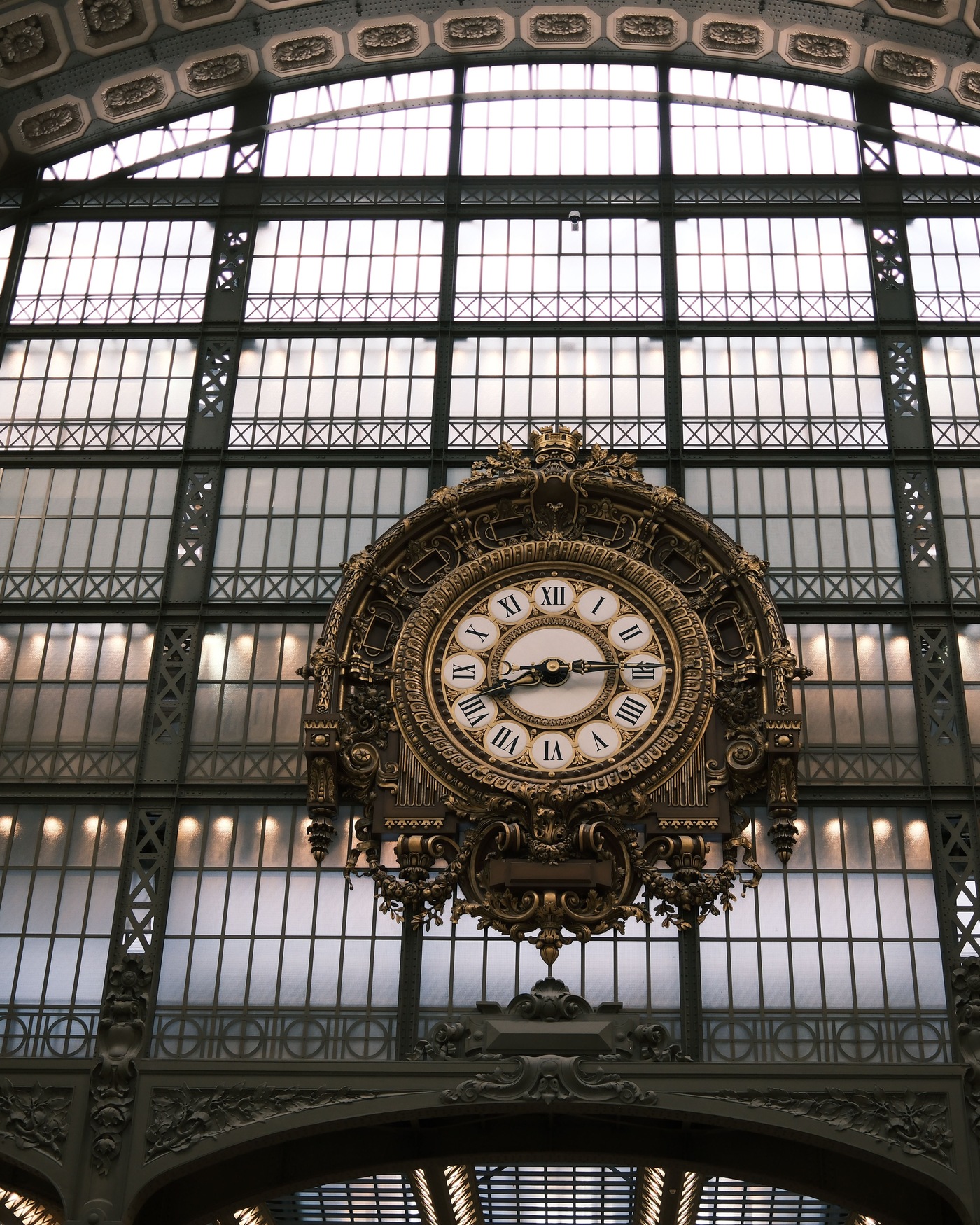
Musée d'Orsay
CLOSED MONThe old railway station, and the best hour is the first. Fifth floor first — the Impressionists, then down. The café behind the clock face looks out through the dial at the Tuileries, and it is worth a coffee purely for the view through the glass.
Lunch on the Left Bank
NEIGHBOURHOODRue de Buci and the streets behind Saint-Germain. Nothing booked. This is the one meal of the trip you should choose by looking through a window.
Palais Garnier
GUIDEDThe Grand Staircase, the Chagall ceiling, and the auditorium if a rehearsal permits. Opera houses are the only buildings that admit outright that the audience is also the show — this one has the receipts.
The last table
BOOK FIRSTBook this one before you book the flights. It is the single hardest reservation of the three days and the trip is arranged around whichever night it lands on.
Four bookings, in the order you should make them.
Paris at this level is a booking problem before it is a taste problem. The room you want has forty covers and a two-month list, and the difference between a great trip and a good one is usually made eight weeks before departure.
You two agree on the Food line — it is the highest axis you share, which is why this is a Gilded Hour edition at all. But agreeing on how much food matters is not the same as agreeing on what kind. On our reading, D. sits meaningfully higher on Familiar and P. higher on New To Us. Averaging that produces the restaurant neither of you would have picked. So we did not average it: one night is his, one is hers, and we say which.
The dinner the trip bends around
Two and a half hours, wine pairing, nothing planned afterwards. Chosen on the part of the shape you share, so there is nothing to negotiate. Book this before the flights — the three days arrange themselves around whichever night it lands on.
BOOK 8–10 WEEKS OUT · DAY ONE OR DAY THREE
The brasserie, corner banquette
Sixty years, one menu, no reinvention. D. runs higher than P. on Familiar — he would rather have the great version of a known thing than the interesting version of an unknown one, and this room is the purest form of that. Ask for the banquette; the tables in the middle are a different restaurant.
BOOK 6 WEEKS OUT · DAY TWO, EARLY
The Left Bank lunch, unbooked
The one meal of the three days we deliberately do not choose. P. runs higher on New To Us, and after two days of decisions made for her, the last full day should contain one room she picked through a window. It will not be the best meal of the trip. It is frequently the one people talk about a year later.
DO NOT BOOK · DAY THREE, MIDDAY
A bar with a doorman, day two
Not dinner. One drink, in a room worth sitting in, before something small near the hotel. Both of you score high on Comfort and this is the cheapest possible way to spend it.
WALK IN BEFORE 19.00
Ask for the sommelier’s second choice. The first is what they are proud of; the second is what they drink.
Much of the best of Paris is shut Sunday and Monday. If your three days include both, we rewrite the order rather than the list.
Service is included by law. Rounding up is normal; fifteen percent is a tell.
Every venue in this edition needs a live check by an operator — opening days, closure weeks, whether the room still has the chef it was famous for. Paris turns over. The named institutions are stable; the tables are not. Nothing here should reach a paying couple unverified within the last thirty days. D. and P. are a fictional sample couple, with a plausible divergence, so the mechanic can be shown.
Three days is the edition. What changes is whose voice it is written in.
This is Paris in one chapter's voice, written for a sample couple. Answered by the two of you, the same three days come back in your chapter — your names, your argument, the rooms named for how you actually travel.
Twenty questions each, answered separately, about fifteen minutes. What comes back is the chapter the two of you actually share — and the edition written in its voice.
NO ACCOUNT NEEDED · SEPARATE DEVICES · PICK UP WHERE YOU LEFT OFF
CHAPTERS · PARIS · THE GILDED HOUR · PREVIEW EDITION
Sourced, not remembered — we have not yet stood in these rooms, and we would rather say so.
Venues named are researched, not endorsed, and are verified before any trip is designed.